
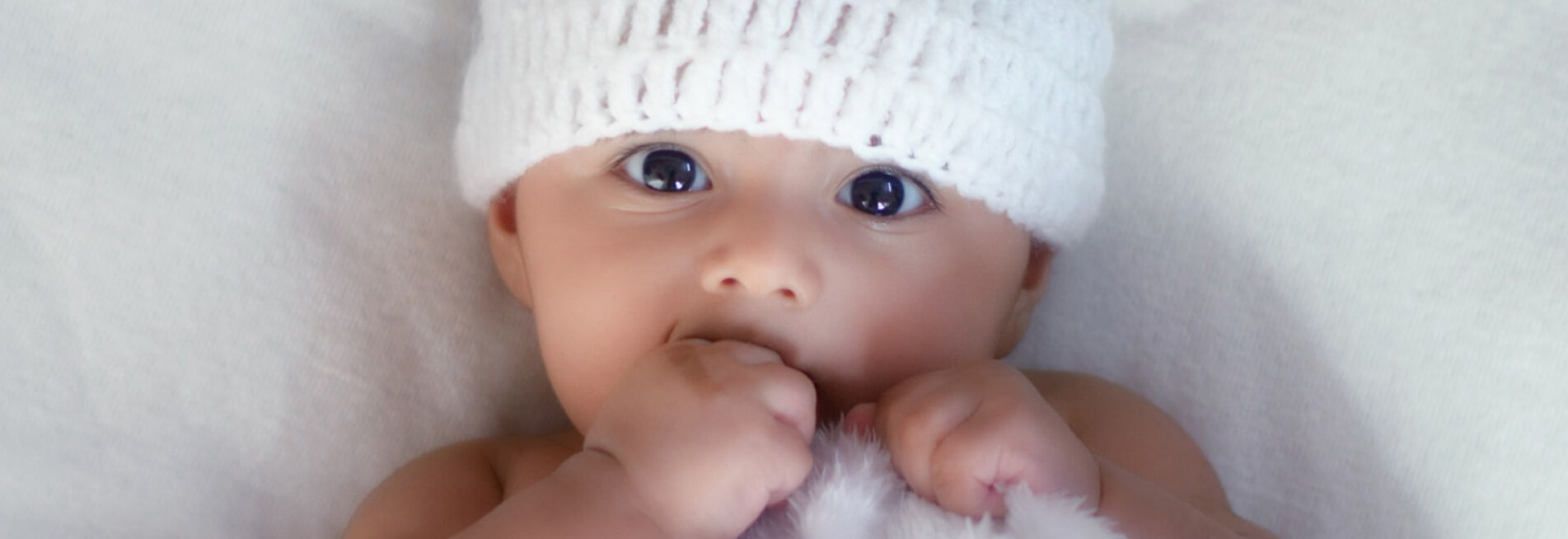
Welcoming a new child into the world is one of the most exciting and challenging events an individual can experience. As parents, we hope for the best for our children’s health and development. When a baby is born with a physical or developmental condition, it can create a great deal of anxiety, particularly if surgery is needed. In these cases, working with an experienced, board-certified physician who specializes in pediatric craniofacial reconstruction can help ensure that your child receives the best possible care.
Dr. Morin is a board-certified plastic and reconstructive surgeon in New Jersey with specialized training in craniofacial and pediatric plastic surgery. He completed a one-year fellowship at Miami Children’s Hospital, where he received advanced training in reconstructing children’s faces and skulls. This background allows him to provide expert care for children with craniosynostosis and other craniofacial conditions. Dr. Morin specializes in cranial vault remodeling surgery in Hackensack, NJ to reshape the skull and support healthy development. To learn more about working with Dr. Morin, contact his office and book a consultation today.
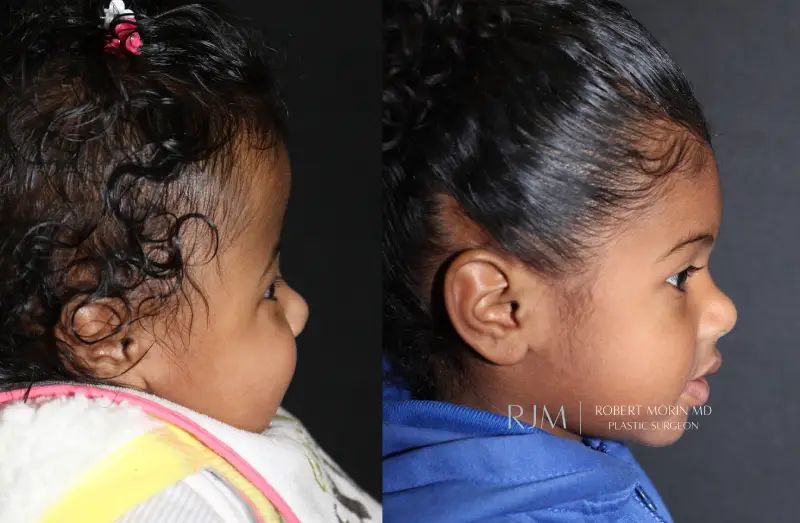
*Results may vary
Craniosynostosis is a congenital condition that affects the proper growth of a baby’s head, and occurs when the skull bones have fused together too early. If your infant has been diagnosed with craniosynostosis, cranial vault reconstruction surgery (also known as CVR surgery) will be needed in order to correct the condition.
When a baby is born, the bones in the top part of the skull (the cranium) are separated. The seams between these bones, called sutures, allow the bone structure to grow and expand. This enables the cranium to create room for the rapidly growing brain. If one or more of the sutures is fused or closed, it prevents the head from growing normally, resulting in a distorted head shape.
The most common craniosynostosis treatment is surgery, so you need to find a specialist in your area that is board-certified, has experience with CVR surgery, and can show you before and after photos from previous operations.
If you are interested in learning more about Dr. Morin’s work, get in touch with our Hackensack office today and our team will be glad to help, as well as address questions and concerns about surgery for craniosynostosis.

General anesthesia

Inpatient

Infants With Craniosynostosis

Several Hours

2-5 Days in Hospital

Improved Skull Shape
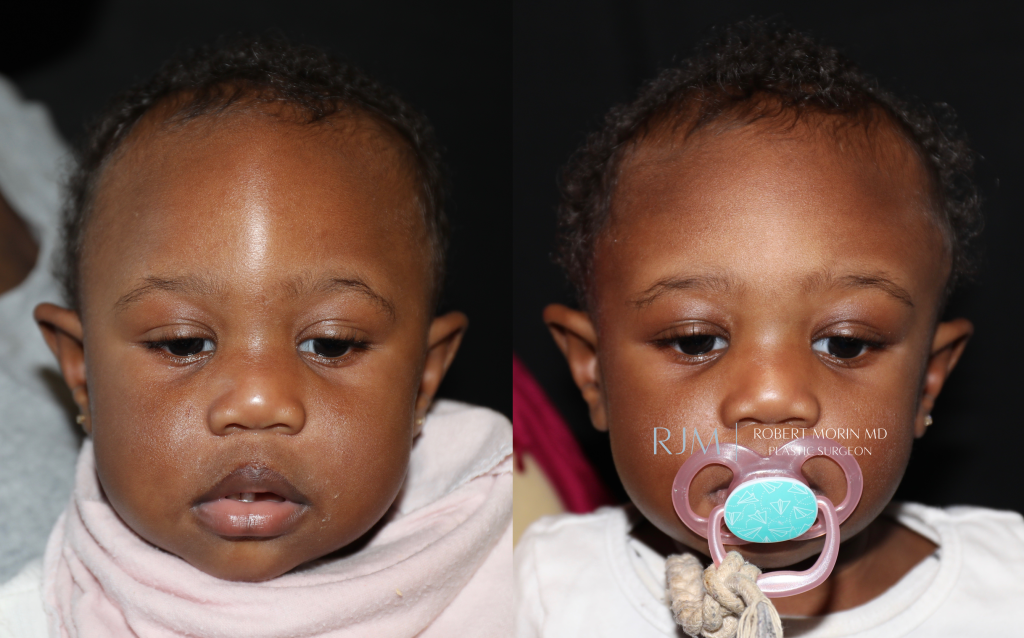
*Results may vary
An abnormally shaped head is the most obvious indication of craniosynostosis. The condition is typically diagnosed by physical examination, and can be confirmed with skull x-rays.
Babies born with craniosynostosis may have an unusually shaped head as soon as they are born. In other cases, the sutures may fuse after birth, so signs may not be visible until the child is older. In either case, consulting with a board-certified craniofacial pediatric plastic surgeon as soon as you notice any possible signs is always the best decision.
Dr. Morin dedicates a large part of his practice to craniosynostosis treatment. He strives to detect this condition as soon as possible and has extensive experience in all cranial vault reconstruction and remodeling techniques in order to deliver the best results to his patients. To find out more about Dr. Morin and his work, contact his office today and we will be glad to help.
Ready to start looking your best? We offer virtual and in-office consultations.
Cranial vault reconstruction is performed to reshape the skull and allow the brain to grow properly. In most cases, babies with craniosynostosis will require surgery. The specific technique depends on the child’s age, the sutures involved, and the severity of the condition.
Several surgical approaches may be used:

Endoscopic craniectomy is typically performed in younger infants, when the cranial bones are still thin and flexible. This minimally invasive technique uses small incisions and a camera (endoscope) to remove the fused suture. It is associated with less blood loss and a shorter hospital stay. After surgery, the baby will need to wear a custom-molded helmet for several months to guide proper skull growth.

Open cranial vault remodeling is usually recommended for older infants or more complex cases. This procedure involves a larger incision and the removal, reshaping, and repositioning of the skull bones to correct the deformity. While it is a more extensive surgery, it allows for immediate and precise correction with long-lasting results.

Fronto-orbital advancement is a specialized form of open surgery used when the forehead and eye socket region are affected (commonly in coronal craniosynostosis). The bones of the forehead and upper eye sockets are carefully reshaped and repositioned to create a more normal contour and protect the eyes and brain.

Distraction osteogenesis is a technique used in select cases to gradually move and expand the skull bones over time. After making controlled cuts in the bone, a small device is placed to slowly separate the segments, allowing new bone to form in the gap. This approach can be especially useful in more complex or syndromic craniosynostosis cases.
Virtual surgical planning is an advanced tool that can be used to help plan cranial vault remodeling surgery. Using specialized imaging and three-dimensional technology, Dr. Morin and the surgical team are able to evaluate the child’s skull shape and anatomy before surgery. This allows the team to create a customized surgical plan based on the child’s specific condition and reconstructive needs.
In many cases, virtual surgical planning can help improve the precision of the procedure by allowing the surgical team to carefully plan how the skull bones will be reshaped and repositioned. It can also help parents better understand the surgical approach and the goals of treatment.
When appropriate, Dr. Morin uses virtual surgical planning to support safe, effective, and highly individualized cranial vault remodeling surgery. The goal is to restore a more normal head shape while giving the brain the room it needs to grow and develop properly.

Cranial vault remodeling is a surgical procedure that can be performed to restructure the bones in the cranium. The goal of the procedure is to create a normal-looking head shape and to give the brain the room it needs to grow and develop normally.
During the procedure, a craniofacial surgeon and a pediatric neurosurgeon will work together in order to release and remodel the bones and correct the deformity, so that the cranium can adequately accommodate the growing brain. This involves removing, reorienting and reshaping abnormally positioned bone in the skull in order to create a normal head shape. The bones are secured in place with absorbable plates and screws, which will dissolve in 12 to 18 months.
Endoscopic craniectomy and open cranial vault remodeling procedures should be performed as early as possible when recommended by a craniofacial specialist. Left untreated, craniosynostosis can cause the head shape to worsen with time. After endoscopic craniectomy, patients generally stay in the hospital for 1 night so the child can be monitored closely and begin healing.
Due to the nature of the surgery, open cranial vault remodeling requires a higher level of postoperative care. Patients generally stay in the hospital for about 4 nights following open cranial vault remodeling, including 2 nights in the Pediatric Intensive Care Unit and 2 nights on the pediatric floor. There is also significantly more swelling associated with open cranial vault remodeling, especially around the eyes.
Our healthcare experts will take care of your child and ensure that he or she receives the best care possible. We strive to keep discomfort at a minimum, and Dr. Morin designs a customized surgical plan for each patient in order to achieve this goal.
Ensure you consult with a craniofacial specialist to determine the best surgical plan for your child.
Craniosynostosis surgery is performed to help correct abnormal head shape, giving the brain enough room to develop properly. The procedure has been performed for more than 4 decades and it can greatly improve symptoms of this condition, however, there are some potential side-effects you should keep in mind before making a decision.
Some of the potential side-effects include:
Dr. Morin is a renowned plastic and reconstructive surgeon that specializes in cranial vault reconstruction operations in Hackensack, NJ. If you want to learn more about working with Dr. Morin, get in touch with his New Jersey office and book a consultation today.
Craniosynostosis can be genetic, but many cases occur without a family history. Some children have it as part of a genetic syndrome, while others develop it spontaneously due to how the skull bones form before birth.
If left untreated, craniosynostosis can restrict normal brain growth. This may lead to increased pressure inside the skull, abnormal head shape, developmental delays, vision problems, headaches, and, in severe cases, long-term neurological issues.
Craniosynostosis affects about 1 in every 2,000 to 2,500 births. It is one of the more common craniofacial conditions treated by pediatric craniofacial specialists.
It is commonly done in the first year of life but may be performed later depending on severity, diagnosis timing, and individual anatomy.
Techniques include open cranial vault remodeling and, in select young infants, endoscopic repair with helmet therapy.
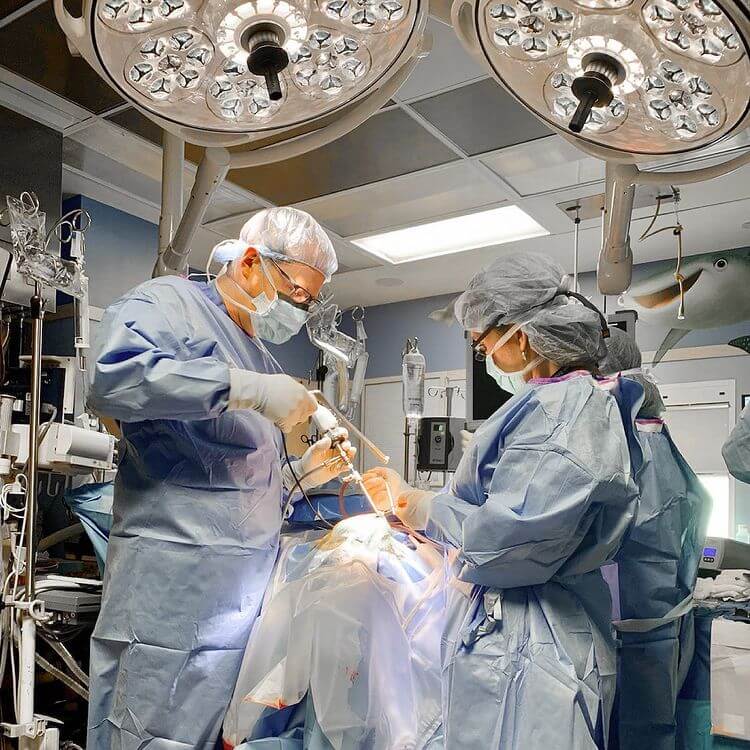
If your baby has a skull deformity, it is important to consult with a multidisciplinary team, including a plastic surgeon who specializes in pediatric craniofacial reconstructive surgery. The craniofacial surgeon, in conjunction with a pediatric neurosurgeon, will determine the best course of action and surgical plan.
Dr. Morin is a craniofacial surgeon with offices in Hackensack, New Jersey who routinely performs surgery on children and babies, treating such conditions as cleft lip, cleft palate, ear reconstruction and cranial vault remodeling. He understands how overwhelming surgery can be for both parents and children, and works with compassion to ensure that all questions and concerns are adequately addressed.
Contact Dr. Morin’s Hackensack office to schedule a craniosynostosis consultation and, if necessary, reconstructive surgery for your child.
Ready to start looking your best? We offer virtual and in-office consultations.
