

Abdominal wall reconstruction is a complex reconstructive procedure designed to restore the anatomy, integrity, and function of the abdominal wall in patients with ventral hernias, incisional hernias, or significant abdominal wall defects. As an experienced abdominal wall reconstruction specialist, Dr. Morin uses evidence-based techniques, including posterior component separation when appropriate, to achieve durable, tension-free repair while preserving abdominal wall function.
Dr. Morin shares the story of a patient following a complex ventral hernia repair with mesh and abdominal wall reconstruction
Abdominal wall reconstruction surgery is a reconstructive procedure that restores both the structural integrity and biomechanical function of the abdominal wall. Unlike a standard hernia repair that focuses primarily on closing a defect, reconstruction addresses weakened musculature, loss of domain when present, and abdominal wall stability to create a durable repair designed to reduce tension and improve long-term function.
Schedule a Consultation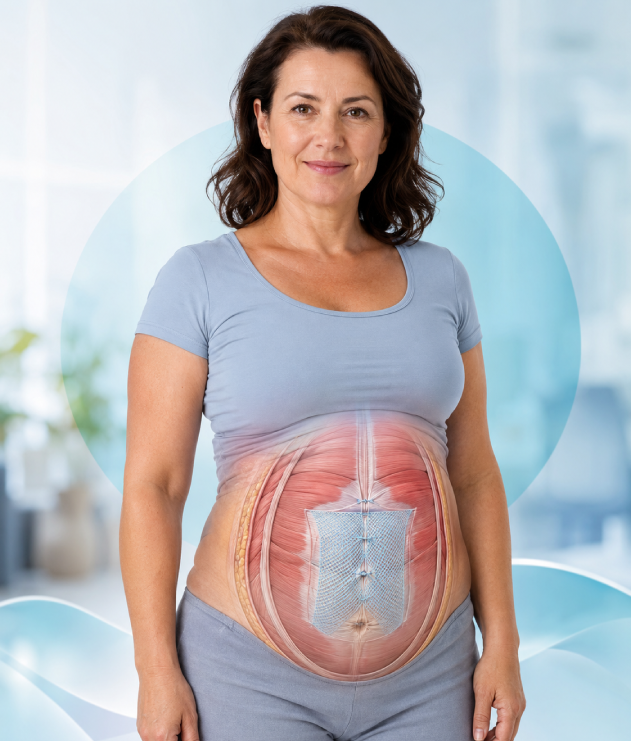

Inpatient Procedure

General anesthesia

Loss of core support due to a hernia

Several hours

Several weeks

Improved core strength and function
Patients with complex ventral hernias frequently experience impaired abdominal wall function rather than cosmetic concerns alone. Weakness of the abdominal wall may contribute to decreased core stability, altered posture, discomfort with activity, impaired lifting mechanics, and limitations during everyday movement.
As abdominal wall function deteriorates, patients often compensate by restricting physical activity or modifying daily tasks. Reconstruction is performed to restore abdominal wall mechanics, improve structural support, and reduce functional limitations whenever possible.
Posterior component separation is an advanced reconstructive technique that creates additional mobility within the abdominal wall while preserving its neurovascular supply. By releasing deeper tissue layers, the abdominal muscles can be advanced toward the midline to achieve tension-free closure of complex defects.
Rather than simply patching the defect, this approach reconstructs the abdominal wall. By releasing deeper layers of tissue, Dr. Morin can reposition the rectus muscles and reinforce the repair, often using ventral hernia repair with mesh for long-term support.
Compared to traditional approaches, including open ventral hernia repair or minimally invasive ventral hernia laparoscopic repair, posterior component separation offers a more comprehensive solution when significant weakness or separation is present.
When evaluating anterior vs posterior component separation, the posterior approach often allows for better tissue preservation, reduced tension, and improved functional outcomes in appropriate patients.

Restores the integrity of the abdominal wall, improving stability and support for everyday movement.
Patients often regain the ability to perform routine activities with greater ease and comfort.
A key factor in long-term success is reducing strain on tissues and improving durability.
By restoring both structure and function, patients frequently feel stronger, more active, and less restricted in their daily lives.

*Results may vary
As an abdominal wall reconstruction specialist, Dr. Morin’s approach is centered on careful evaluation, thoughtful surgical planning, and restoration of both form and function. Treatment planning is individualized and based on defect size, tissue quality, previous abdominal operations, patient comorbidities, and overall reconstructive goals. His goal is to choose the safest and most effective reconstructive plan for each individual patient.
When appropriate, posterior component separation can be an excellent option for rebuilding the abdominal wall and improving long-term function.
Abdominal wall reconstruction is performed under general anesthesia and typically takes several hours, depending on the complexity of the hernia.
The process begins with a thorough pre-operative evaluation to determine the most appropriate surgical plan. During reconstruction, the abdominal wall is carefully evaluated. Fascial layers are mobilized, musculature is restored to a more anatomic position whenever possible, and mesh reinforcement may be incorporated to strengthen the repair and reduce recurrence.
Patients typically stay in the hospital for monitoring before returning home. Dr. Morin provides detailed guidance to support healing and ensure a smooth recovery process.
Recovery after ventral hernia repair varies based on the extent of reconstruction, but most patients follow a gradual progression:
Ventral hernia repair recovery time depends on individual factors, but following post-operative instructions closely helps optimize healing and long-term results.

Following successful abdominal wall reconstruction surgery with Dr. Morin, many patients experience measurable improvements in abdominal wall function and physical activity. Many patients report:
These outcomes highlight why Dr. Morin is one of the best abdominal wall reconstruction surgeons in the New Jersey area.
Abdominal Wall Reconstruction: A Patient’s Journey
Abdominal wall reconstruction may be recommended for patients with:
Not all hernias require advanced reconstruction. The appropriate treatment depends on the size of the hernia, tissue quality, overall health, and patient goals. Dr. Morin evaluates each case individually to determine the most effective surgical approach.
Surgical risks vary depending on the size of the defect, previous operations, patient health, and the complexity of reconstruction. Careful pre-operative planning and meticulous surgical technique help reduce these risks, although no procedure is entirely without potential complications.

Not all hernia procedures are the same. A standard hernia repair often focuses on closing or patching the defect. In contrast, abdominal wall reconstruction is a more advanced approach designed to restore the structure and function of the entire abdominal wall.
For smaller hernias, a simple repair, such as open ventral hernia repair or ventral hernia laparoscopic repair, may be sufficient. However, for larger or more complex cases, reconstruction addresses restoration of abdominal wall anatomy and biomechanics in addition to repairing the hernia defect.
Understanding this distinction helps patients choose the most appropriate treatment for long-term results.
Ready to start looking your best? We offer virtual and in-office consultations.
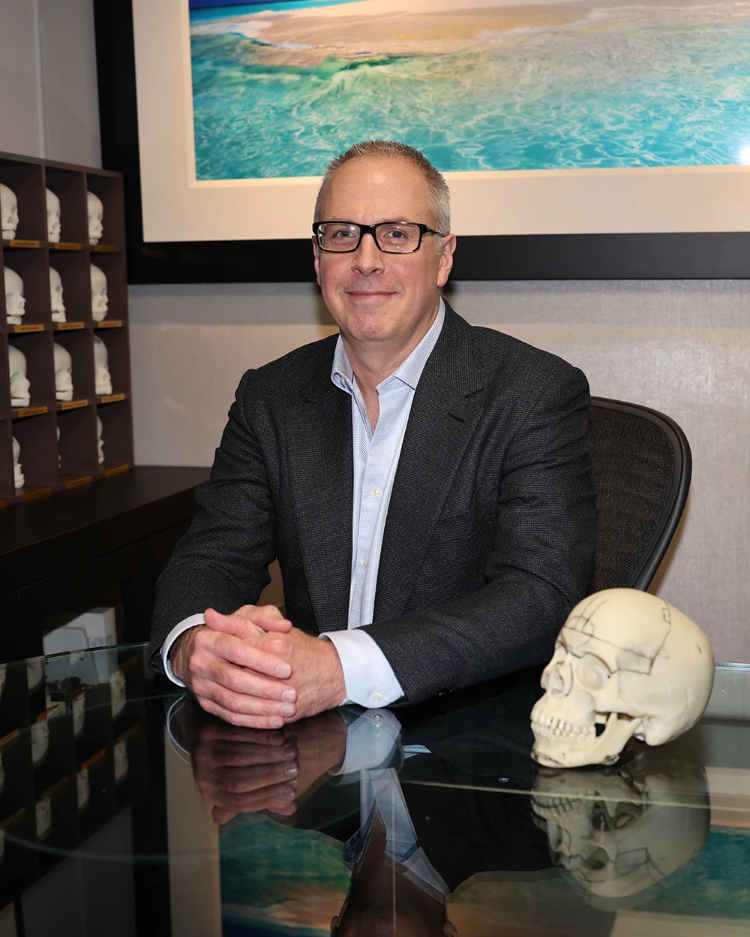
DDr. Morin is an experienced abdominal wall reconstruction specialist who performs advanced reconstructive procedures for patients requiring complex hernia repair, incisional hernia repair, and ventral hernia reconstruction. His surgical planning emphasizes restoration of anatomy, preservation of function, and durable long-term repair tailored to each patient’s clinical presentation.
Through advanced surgical reconstruction techniques, Dr. Morin delivers results that prioritize both function and long-term durability, making him a trusted choice for patients seeking expert care in Hackensack, NJ. Contact the office to book your consultation and speed up the process by reviewing our practice patient information requirements.
Schedule Your ConsultationAll surgery carries risk, but when performed by experienced surgeons, it is considered safe and effective for appropriate candidates.
In many cases, yes. Because it is often medically necessary, insurance may cover part or all of the procedure depending on your policy.
There is no single “best” mesh for every patient. Mesh selection depends on factors including defect size, tissue quality, contamination risk, previous surgery, and the reconstructive technique being performed. Dr. Morin selects the most appropriate material based on each patient’s individual needs.
Specialized centers with experienced reconstructive surgeons provide the best outcomes, especially for complex cases.
Yes. Abdominal wall reconstruction is frequently performed for incisional hernia repair, particularly when the hernia is large, recurrent, or associated with significant abdominal wall weakness.
Dr. Robert Morin is a board-certified plastic and reconstructive surgeon with advanced expertise in complex ventral hernia repair procedures. His experience with techniques such as posterior component separation allows him to restore core strength and function while prioritizing long-term outcomes and patient quality of life.
Ready to start looking your best? We offer virtual and in-office consultations.
